Four engineering professors win NSF CAREER awards
Early-career faculty make their mark in mathematics, materials science and electrical and computer engineering.

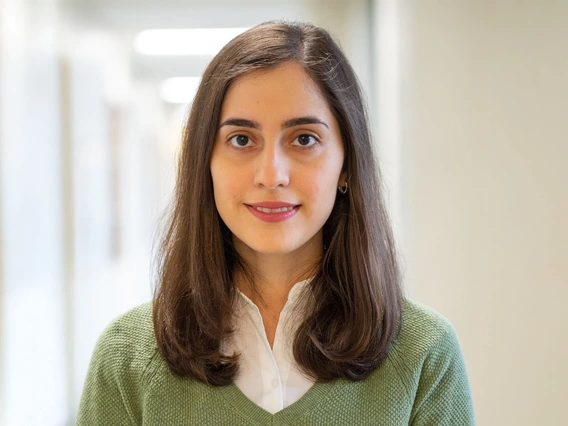
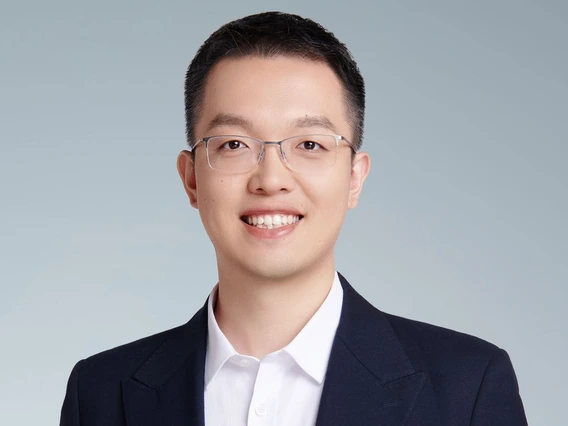
(From left) Marat Latypov, Narayanan Rengaswamy, Afrooz Jalilzadeh, and Xiaodong Yan are recipients of the 2025-2026 National Science Foundation CAREER award.
Four faculty members in the University of Arizona College of Engineering earned CAREER Awards from the National Science Foundation. Their work ranges from scaling quantum computing and recycling aluminum to building brain-like computer chips. The CAREER Award is the NSF’s most prestigious recognition of early-career faculty who serve as academic role models in research and education.
“I am proud to see our young faculty tackle some of society's biggest problems with engineering,” said David W. Hahn, the Craig M. Berge Dean of the college. “Having four winners in the same cycle is a marvelous success for the college.”
Awardees include Narayanan Rengaswamy, assistant professor of electrical and computer engineering, Afrooz Jalilzadeh, assistant professor of systems and industrial engineering, Marat Latypov, assistant professor of materials science and engineering, and Xiaodong Yan, Frank L. and Daphna Lederman Professor and assistant professor of MSE and ECE.
Narayanan Rengaswamy builds quantum networks
Rengaswamy will build a network of quantum nodes to test error-correcting codes necessary for large-scale quantum computing. However, qubits – the fundamental unit for transmitting and processing data in quantum computers – consist of sensitive subatomic particles. Rengaswamy is tackling this with quantum low-density parity-check codes.
He will distribute coded qubits across a network of quantum hardware and explore ways to use those nodes to build the most efficient error-correction system. Once connected, the components could operate a resilient quantum computer.
“It will show the experimentalists what hardware capabilities are needed, and how that will affect the scalability of their systems,” Rengaswamy said. “Such realizations will allow quantum computers to scale while remaining reliable under realistic noisy conditions.”
Afrooz Jalilzadeh untangles complex systems with math
Jalilzadeh is advancing a mathematical framework that predicts challenges in distributed power systems – the backbone of modern energy infrastructure, machine learning and wireless communication. Her framework improves models for smart grids and large-scale machine learning, which relies on complex decision making.
These technologies require accurate models to simulate their performance in the real world. Yet, existing models rely on simplified assumptions that don’t capture the full picture, Jalilzadeh explained.
“For instance, in large-scale networks like energy grids or communication systems, it’s often assumed that resources are shared evenly or that all agents have complete information,” she said. “In reality, participants make decisions independently, and their choices influence one another.”
Marat Latypov sees potential in scrap metal
Latypov is developing a method to recycle aluminum alloys from post-consumer scrap without compromising performance. Pure aluminum, mined from the Earth and reduced from ore, is among the most energy-intensive metals to produce. Recycling scrap aluminum is far less wasteful, but it significantly reduces performance compared to alloys made with primary aluminum. To address this problem, Latypov wants to understand how the materials are weakened during recycling.
“Once we have that understanding, we can tune the metallurgical processing of recycled alloys to achieve superior mechanical performance with no or minimal use of primary metals,” he said.
Xiaodong Yan’s AI chips take inspiration from brains
Yan is creating moiré synaptic transistors, which mimic the region of the human brain that combines memory, logic and parallel processing. The moiré patterns are created by stacking 2D materials just a few atoms thick – graphene and hexagonal boron nitride – then twisting the layers, resulting in unprecedented tunability of electronic properties.
Laying the groundwork for neuromorphic computers, these brain-inspired chips are stable at room temperature, retain data without power, and consume just 20 picowatts – billions of times less power than existing neuromorphic devices.
“By greatly reducing energy consumption, our devices will make it possible to bring AI and advanced computing into settings where current chips cannot operate effectively,” Yan said, adding that devices such as autonomous drones, intelligent robots and wearable health monitors stand to benefit.