AAAS elects Dr. Marvin Slepian to 2025 class of fellows
The Regents Professor of biomedical engineering and medicine is one of three University of Arizona faculty to accept the honor recognizing research excellence.

Dr. Marvin Slepian, an AAAS fellow and associate department head of biomedical engineering, develops life-saving cardiovascular implants at SynCardia Systems.
The American Association for the Advancement of Science announced its 2025 class of fellows on March 26. The honor, awarded annually by vote of the AAAS membership, recognizes researchers for sustained contributions to their fields.
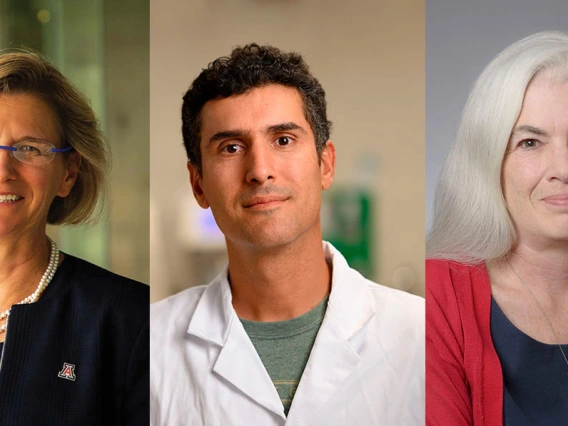
Three University of Arizona faculty members were elected, including Dr. Marvin Slepian, Regents Professor of biomedical engineering and medicine. The association also selected Valerie Trouet, professor in the Laboratory of Tree-Ring Research, and Vicente Talanquer, University Distinguished Professor of chemistry and biochemistry.
"This year's AAAS Fellows have demonstrated research excellence, made notable contributions to advance science, and delivered important services to their communities," said Sudip S. Parikh, AAAS chief executive officer and executive publisher of the Science family of journals. "These Fellows and their accomplishments validate the importance of investing in science and technology for the benefit of all."
AAAS will celebrate the professors at the annual Fellows Forum in Washington, D.C., on May 29.
This year's class brings the U of A's total number of elected fellows to 30.
Slepian: Engineer, doctor, lawyer
The AAAS recognized Slepian, also a member of the James E. Rogers College of Law faculty, for "his distinguished contributions to biological, biomechanical, and device aspects of the field of cardiovascular bioengineering, to medical technology, and to intellectual property leadership."
Slepian's laboratory developed the first biodegradable coronary stent, which opens clogged blood vessels and supports healing before dissolving. He also pioneered "arterial paving" – a technique that coats the blood vessel interior with a flexible polymer that props it open, shields the arterial wall, and delivers medication directly to the affected vessel wall. This prevents tissue regrowth after arterial widening as well as long-term fatty plaque accumulation, advancing stroke and heart attack prevention.
He created a wide range of cardiovascular devices, such as heart valves, and co-developed the first FDA-approved total artificial heart, which he commercialized through SynCardia Systems, a company he founded.
His current work includes studying the impact of physical forces such as shear and pressure on platelet activation and blood clot formation, and translational research efforts to improve blood-contacting devices. He has also pioneered wearable smart sensors that track not just steps, but the full range of how a person moves – data that, combined with artificial intelligence, can support remote patient monitoring and precision health applications.
Slepian is the founder and director of the Arizona Center for Accelerated Biomedical Innovation, a university-wide center connecting faculty science with real-world clinical needs to bring inventions to market. ACABI focuses on advancing research and application of AI, safely and effectively, in education research and patient care.
At ACABI, "we go around, find unmet needs, find science, and become a creativity engine, to innovate," Slepian said.
Slepian, who is also recognized for his contribution to intellectual property leadership, said earning a law degree was a natural extension of his scientific work. A holder of more than 100 patents, he was appointed to the Patent Public Advisory Committee of the U.S. Patent and Trademark Office in 2023.
"You need science, medicine, and engineering to innovate," Slepian said, "but you also need law to operate."