American Meteorological Society names Armin Sorooshian 2027 Fellow
Professor of chemical and environmental engineering assumes leadership role amid career recognition.

Airborne particle researcher Armin Sorooshian, acting department chair and professor of chemical and environmental engineering, studies how aerosols shape clouds, climate and Arizona's air quality.
The American Meteorological Society honored Armin Sorooshian, professor and acting chair of the Department of Chemical and Environmental Engineering, as a member of its 2027 Class of Fellows. His research on airborne particles has advanced climate research and air quality monitoring.
AMS is the leading professional society for weather, climate and atmospheric sciences in the U.S., with about 12,000 members worldwide. Sorooshian is one of 28 fellows in the 2027 class, a distinction reserved for individuals who make substantial contributions to atmospheric science.
“It’s a deep honor,” said the University Distinguished Scholar. “Usually, these honors don’t happen much, if at all, in a career, and when they do, it’s a very special feeling.”
Bringing clarity to a cloudy subject
Sorooshian is fascinated with aerosols – tiny particles suspended in the atmosphere. Aerosols affect human health, climate, weather and visibility, but they are challenging to track.
“Aerosols can cross the ocean over the span of a few days,” he said. “They are really hard to study because they're always moving and changing.”
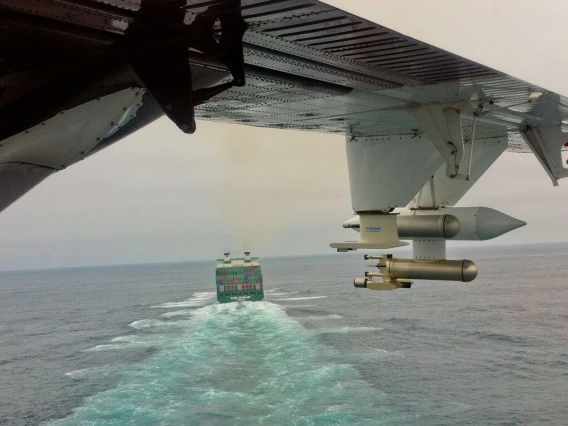
As a graduate student, Sorooshian discovered a research group at the California Institute of Technology doing fieldwork from airplanes, and the idea hooked him. He applied that same technique to fly through and around clouds with cloud-water collectors and aerosol probes.
The method was essential for one of the largest research efforts of Sorooshian’s career: NASA’s $30 million Aerosol Cloud Meteorology Interactions Over the Western Atlantic Experiment, or ACTIVATE. He led an international team from 2020 to 2022 that used two aircraft to study low-lying clouds over the Northwest Atlantic Ocean.
The project aimed to understand how human-made and natural particles affect cloud formation. Cloud feedback, or how clouds absorb and reflect solar energy, is one of the biggest mysteries in climate models.
ACTIVATE data improved those models, showing that air pollution changes both how many droplets form in clouds and how big they get. The effect also varies depending on the weather and the type of particles and clouds involved. The observations confirmed that both human-made and natural particles affect clouds this way.
“Researchers around the world are now using the dataset to improve climate models,” Sorooshian said.
Analyzing Arizona’s air
Closer to home, Sorooshian’s research team uses both low-cost sensors and more advanced NASA remote sensors placed on U of A rooftops to study trace gases like ozone, aerosols like dust and other elements of the region’s air. These sensors measure changes in air quality over time, helping researchers see how dust and other particles move through the atmosphere.
“We have this unique situation here in Tucson, where we live in a populated, urbanized desert,” he said. “It’s a cool and special natural lab to study since most desert regions of the world do not have measurement infrastructure.”
Tracking these pollutants pinpoints when air quality shifts and what's causing it. The findings can guide efforts to monitor and predict air pollution in the region.
Sorooshian has been working to help Tucson and Phoenix residents make informed decisions, such as when to limit outdoor activity or use air purifiers during poor air quality.
“We’ve been trying to get more involved with outreach and science communication in the local community,” he said. “Educating people about what ozone and aerosols are, where they come from and what days might be the worst to be outside is important.”
Leading with an open mind
The AMS honor comes as Sorooshian steps in as acting chair of the Department of Chemical and Environmental Engineering, where he plans to raise the department's profile and strengthen faculty collaboration.
“I feel pretty battle-tested already, and I’m ready to take on another challenge,” he said.
He also sees opportunities to connect his air quality research to challenges in water and energy.
“I feel like this role lends itself to broadening my perspective on research, becoming more interdisciplinary and finding overlaps between my work and other areas of chemical and environmental engineering,” Sorooshian said.
“I think the best is yet to come.”